
Comrade Chaudhary Fateh Mohammad
(16 May 1923 – 25 May 2020)
Comrade Chaudhary Fateh Mohammad is a revolutionary political leader, one of the founder of Peasants movement and lifelong campaigner for the rights of oppressed people, who has passed away on Monday, 25 May 2020 at 4.45am.
Comrade Chaudhry Fateh Mohammad was born in May 1923 in lower middle-class family in a small village “Chaharke” near Jalandhar. After his B.A. Exam, he joined British Army and travelled to UK to fight fascism. In the wake of Partition in 1947, he migrated to Pakistan and settled in a village in Toba Tek Singh. Within two months of his migration, he joined rights movement for the settlement of migrant from India and was elected its regional head.
Ch. Fateh Mohammad joined the Communist Party of Pakistan in 1948 and became member of its district committee with the special task of reorganizing the Kissan (peasant) movement. He started full time work for the party and played instrumental role to organise Kissan Conferences. He also started the trade union movement in Lyallpur in 1949 and was elected as a member of the Central Committee of Pakistan Trade Union Federation in 1950 congress. Having been jailed for his political activities during the time of all Pakistani governments (except Benazir Bhutto), Ch. Fateh Mohammad had a first arrest warrant issued against him in 1951 prompting him to go underground, during which period he contested elections for a Punjab Assembly seat. His campaign team included Mazhar Ali Khan (father of Tariq Ali) and Prof Safdar Mir and was supported by mass organisations including Pakistan Kissan Committee, Pakistan Trade Union Federation, Democratic Students Federation, Progressive Writers Association, Democratic Women Association. With the outlawing of the Communist Party, upon his release Ch. Fateh Mohammad and his fellow comrades followed the party instructions and joined Mian Iftikhar-Ul-Din to form Azad Pakistan Party. Azad Pakistan party was later merged with National Party and formed National Awami Party (NAP), a broad based progressive democratic party.

His second major stint of jail came in the late 50’s during the first martial law regime of General Ayub Khan when he was kept in the torcher cell of Lahore Fort for 36 days, then moved into Lahore jail and Lyallpur jail (before being out under house arrest for another two years three months), during which time he developed a strong bond with fellow prisoner Faiz Ahmed Faiz. Upon being released in 1962, Ch. Fateh Mohammad threw himself into organizing a series of peasants’ rights conferences for the abolition of large feudal land holdings in Pakistan.
This near decade long work by him and his comrades culminated in the massive Kissan conference on 23 March 1970 in Toba Tek Singh, famous as Bhashani Kissan Conference. Organised and supported by the major progressive and Left figures of the day and attended by over 300,000 people, this conference, the biggest in its history to date, played significant role in initiating land reform and in the future politics of Pakistan. After the conference, Ch Fateh Mohammad and Masih-Ul-Rehman (East Pakistan) were arrested. Toba Kissan Conference made massive impact on the politics of Pakistan and all political parties, including Jamaat-e-Islami included land reforms in their manifestos. After separation of East Wing of Pakistan, Ch. Fateh Mohammad and his fellow comrades of NAP Bhashani formed Pakistan Socialist Party. He was elected its Federal Secretary Agriculture.
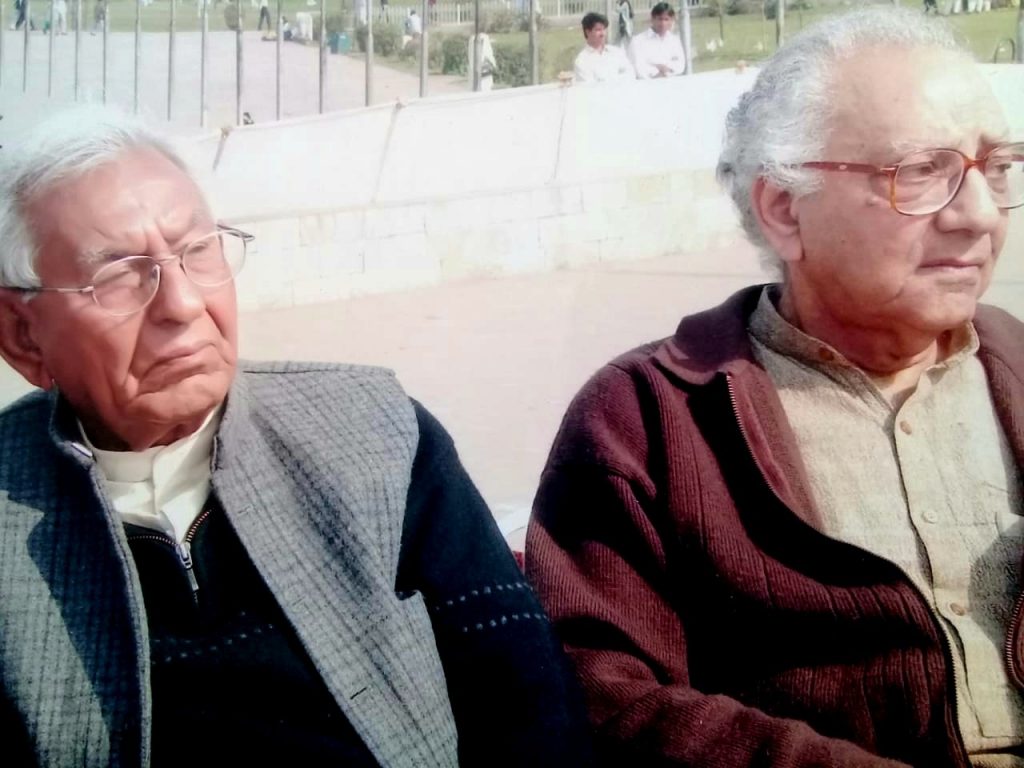
Left movement was divided in Pakistan since partition, particularly after ban of the Communist Party in 1953. During Zia’s Martial Law regime mass political arrests were made in early 80’s. Comrade C.R. Aslam, Abid Hassan Minto, Ch. Fateh Mohammad, Major Ishaq Mohammad and many other comrades of left wing parties were detained at Central Jail Faisalabad, where they decided to reunite left forces to form a united revolutionary party. In spite of a setback and split of Pakistan Socialist Party, the process of mergers started in 1986. Ch. Fateh Mohammad again initiated mass Kissan Conferences throughout the country, most prominent were in Kabirwala, Narowal, Sheikhupura, Jhang and Toba Tek Singh. These conferences motivated left workers in involved them in building revolutionary movement and further enhance the merger process. Therefore, they formed the Workers Party, Awami Jamhoori Party, and then National Workers Party in 1999, when both factions of Pakistan Socialist Party and Pakistan Nation Party merge together. Convinced in his belief that a united and operational political party of the Left is vital for any social change in the Pakistan, in 2010, Ch. Fateh Mohammad was instrumental in helping to bring about the merger of five Left parties to form Workers Party of Pakistan. Ch Fateh Mohammad was elected president of Punjab Province party. In November 2012, Workers party merge with Awami Party and Labour Party Pakistan and formed Awami Workers Party.
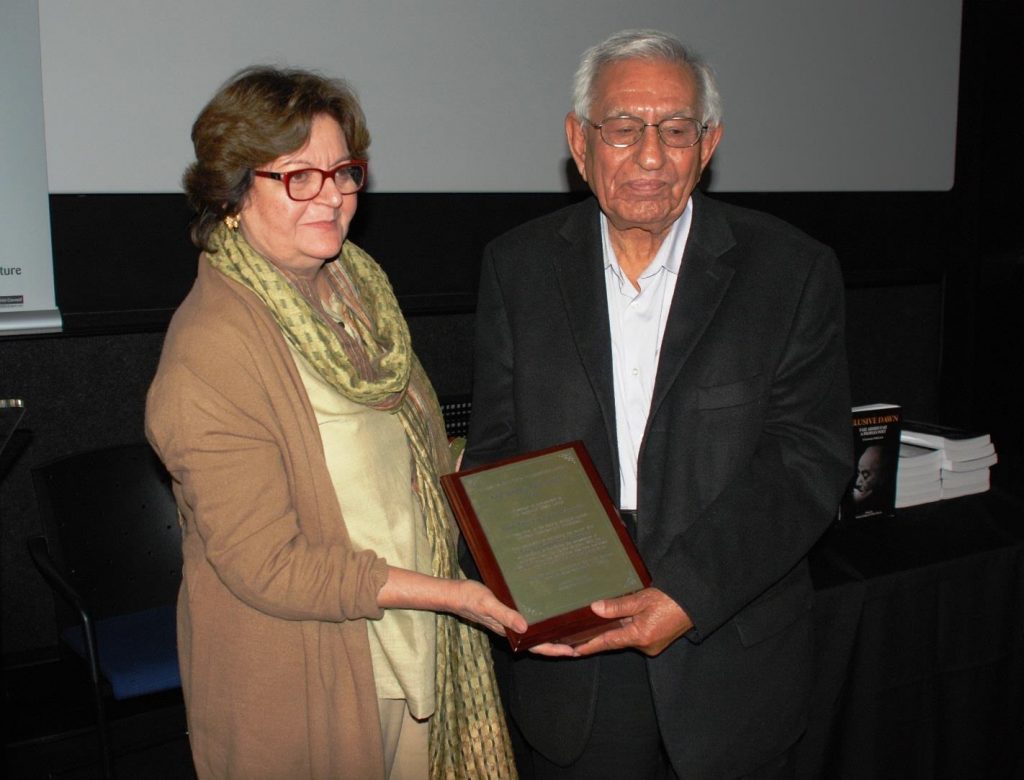
Ch Fateh Mohammad visited UK in 2011 to spend time with his son Pervez Fateh and his family, where he was awarded Faiz Peace Award by Faiz Award Committee, in recognition of his lifelong struggle against feudalism, militarism and imperialism. Faiz award committee in US stated that Ch. Fateh Mohammad’s leadership in organizing the March 1970 Toba Tek Singh Kissan Conference will continue to illuminate the conscience of the nation about the dignity of labour. With the passage of time, this conference has only increased in its ability to inspire the younger generations. To date, this conference remains the apex moment in the history of class struggle in Pakistan. The award was presented by Salima Hashmi, daughter of Faiz Ahmed Faiz, in a public meeting in London.
During his visit to UK, his party comrades, particularly Mohsin Zulfiqar, Masood Punjabi, Abbas Malik, Ijaz Sayyed convinced him to write history of left movement in Pakistan. Due to his age and travel limitations, he agreed to write his autobiography instead and cover struggle, he contributed. This book “JO HUM PE GUZRI” was published in 2016.
Ch. Fateh Mohammad worked with thousands of progressive activists and leaders, but he was closely associated with Dada Feroz-ud-Din Mansoor, Prof Eric Cyprian, C.R. Aslam, Abid Hassan Minto, Mian Iftikhar Uddin, Maulana Abdul Hameed Khan Bhashani, Syed Mutlabi Faridabadi, Sardar Shaokat Ali, Mira Mohammad Ibrahim, Rao Mehroz Akhtar Khan, Major Ishaq Mohammad, Dr Mohammad Abdullah, Kaneez Fatima, Anis Hashmi, Syed Qaswar Gardezi, Malik Mohammad Ali Bhara, Ghulam Nabi Kaloo, Hassan Askri, Akhtar Hussain, Yousaf Mustikhan, Chacha Mohammad Din, Shaheen Shah, Ch. Bashir Ahmed, Noor Mohammad Chohan, Ch Naeem Shakir, Mian Mahmood Ahmed, Ch Bashir Javed and many others.
Nationally respected for his political principles, internationalism, boundless energy and infectious optimism in a brighter and egalitarian future, Ch. Fateh Mohammad has remained an inspirational and committed activist for progressive causes and peasants rights over 72 years through the decades of ravages that progressive movements have suffered in Pakistan.